
Follow us on Instagram

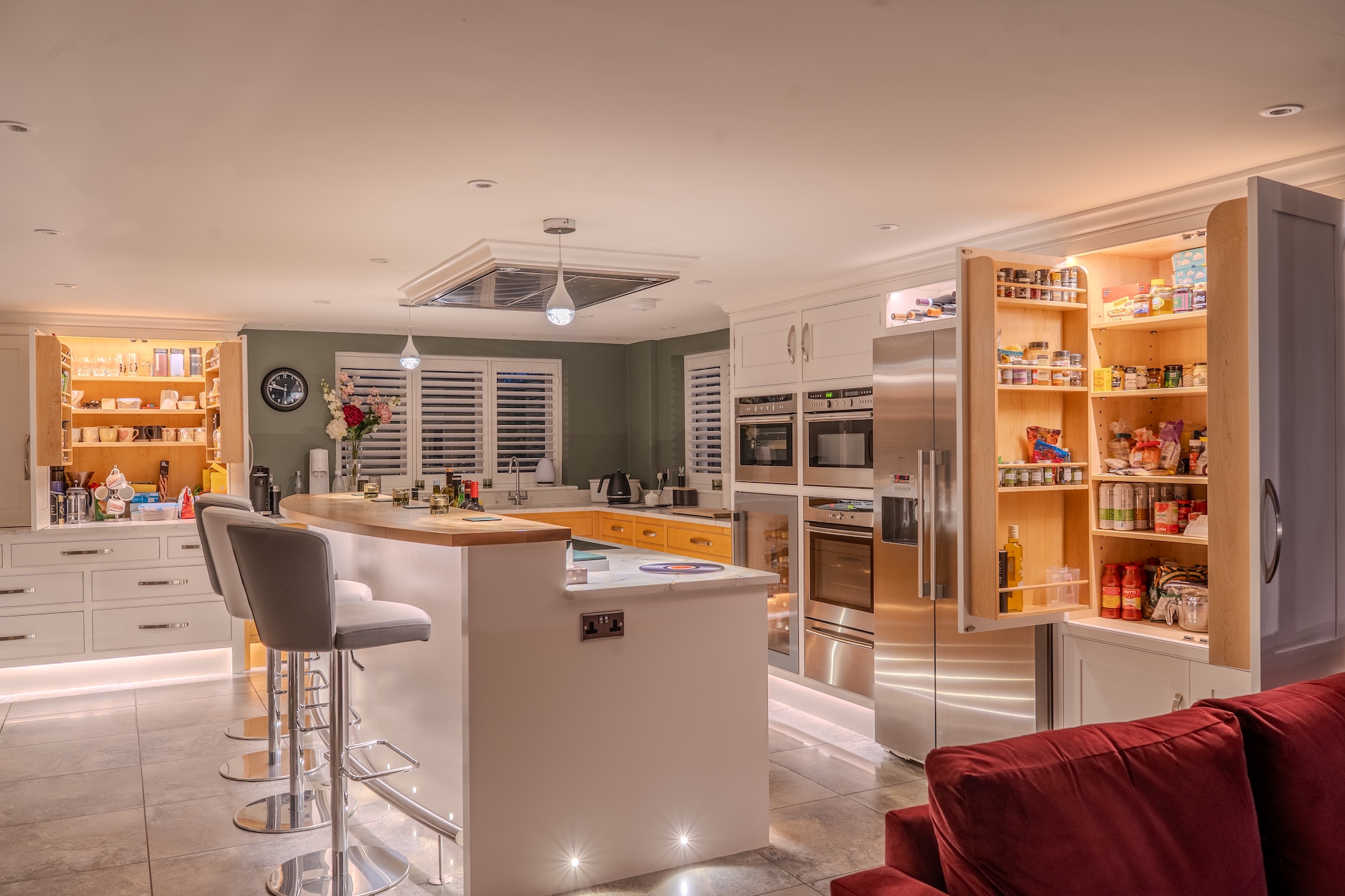
Under cabinet lighting is one of the most impactful upgrades you can make to a kitchen. It eliminates the shadows that overhead lights cast across your worktops, creates a warm ambient glow in the evening, and adds genuine value to the space. But choosing the right setup involves more than picking the first LED strip you find online.
This guide covers everything you need to know — from selecting the right LED strip type and colour temperature to choosing a profile, driver, and controller that all work together.
Ceiling downlights sit behind you when you face the worktop, which means your own body casts a shadow over the exact area you need to see. Under cabinet LEDs solve this by placing the light source directly above the work surface, providing even, shadow-free illumination for food preparation, cooking, and reading recipes.
Beyond the practical benefits, under cabinet lighting transforms the feel of a kitchen. A warm white glow under wall units creates a layered lighting scheme that makes the room feel more inviting, especially in open-plan living spaces where the kitchen is always on show.
Not all LED strips are suitable for kitchen use. Here are the key specifications to consider:
Brightness
For task lighting over worktops, you want a strip that produces at least 800–1,000 lumens per metre. Anything lower will look dim and underwhelming once installed. Our single colour COB LED strips are a popular choice because they produce a smooth, dot-free light that works particularly well at close range under cabinets.
Colour Temperature
Most kitchens suit warm white (2700K–3000K) for a natural, comfortable feel. If you want flexibility, consider a CCT tuneable strip that lets you adjust between warm and cool white depending on the time of day or mood.
IP Rating
Standard indoor strips (IP20) are fine for most under cabinet applications. However, if you’re installing directly above a sink or hob where steam and splashing are likely, choose an IP65 or IP67 rated strip for added protection.
Strip Type: COB vs SMD
COB (Chip on Board) strips produce a continuous, even line of light with no visible dots — ideal for close-range applications like under cabinet lighting where the strip is visible. Traditional SMD strips show individual LED dots which can look less refined at close quarters.
An aluminium LED profile (also called a channel or extrusion) houses the strip and serves three purposes: it acts as a heatsink to extend the life of the LEDs, it provides a clean mounting surface, and the diffuser cover smooths out any remaining light dots for an even finish.
For under cabinet installations, a surface mounted profile is the most common choice. It sits flush against the underside of the cabinet and can be cut to length on site. If you want the strip completely hidden, a recessed profile can be routed into the cabinet base for an ultra-clean look.
Every LED strip needs a driver (power supply) to convert mains voltage to the low voltage the strip requires — typically 24V. The driver needs to be rated for the total wattage of the strip run. As a rule, add 20% headroom to your calculation to avoid running the driver at full capacity.
For example, if your strip draws 10W per metre and your total run is 4 metres, you need a driver rated for at least 48W (40W + 20%). If you want to dim the lights, make sure you choose a dimmable driver paired with a compatible dimmer or controller.
Can I cut LED strip lights to fit my cabinets?
Yes. LED strips have designated cut points marked along their length (usually every 50–100mm). Always cut at these marks using sharp scissors or a craft knife. Cutting elsewhere will damage the circuit.
Do I need a separate driver for each cabinet?
Not necessarily. A single driver can power multiple strips as long as the total wattage doesn’t exceed the driver’s rating (with 20% headroom). For longer runs, check for voltage drop — if strips dim towards the end, you may need to inject power from both ends.
What colour temperature is best for kitchens?
Warm white (2700K–3000K) is the most popular choice and suits most kitchens. If you want the option to switch between warm and cool, a CCT tuneable strip with a compatible controller gives you full flexibility.

.jpeg)
.jpeg)


.svg)


